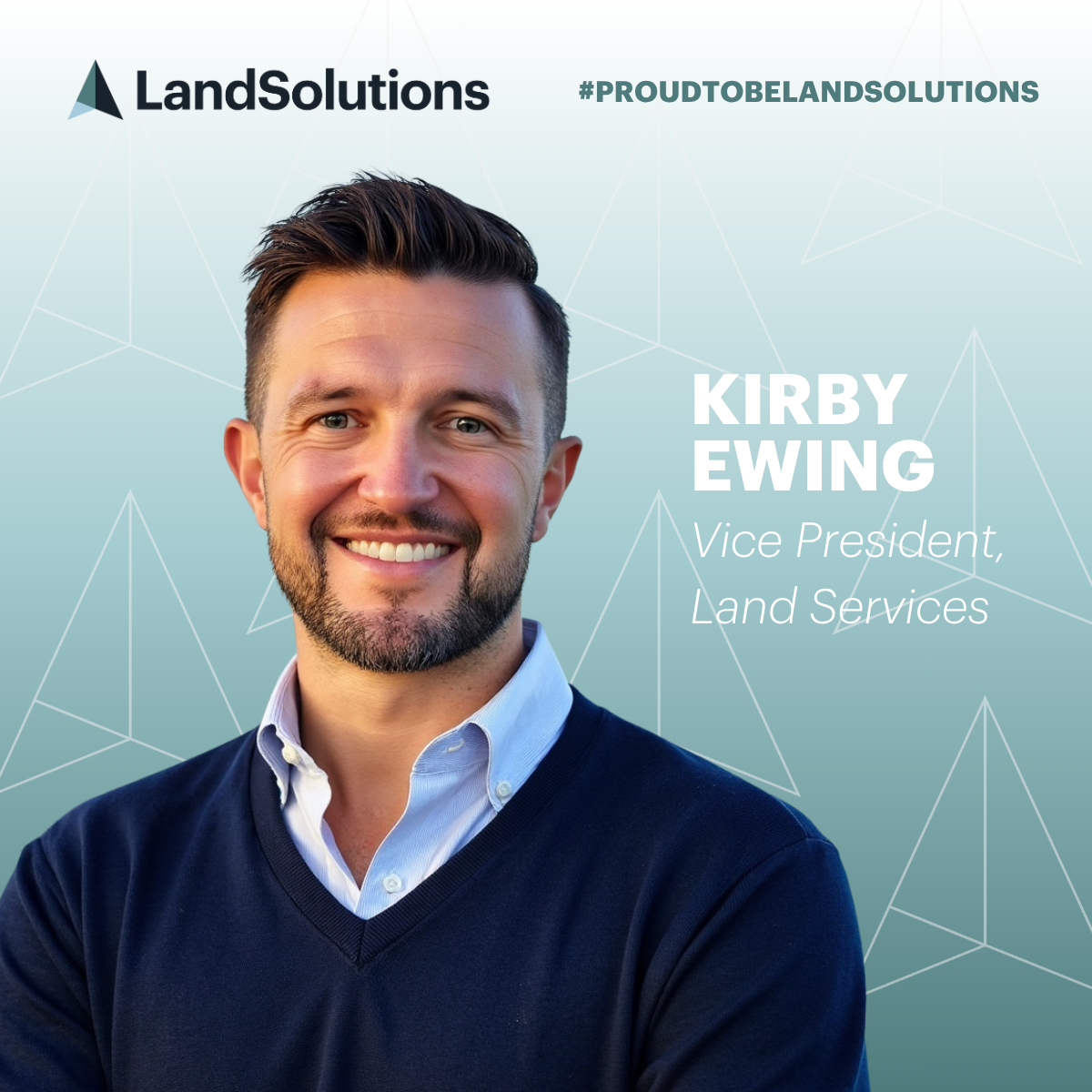
In Kirby’s garage sits a black-and-yellow tote filled with history—pins, awards, and presidential medallions from decades of right of way work. Some date back to the 1950s, when his grandfather helped shape the profession. Others belonged to his father, who carried that legacy forward. Today, Kirby adds his own chapter to a story of stewardship, connection and community. A third-generation land and right of way professional contributing to an industry built on relationships and trust.
“I grew up around this work,” he says. “I went to my first IRWA conference when I was five or six. Back then, families came along. I remember horses, barbecues, and meeting people who shaped the field. It’s more than a job—it’s a community.”
With more than 15 years in the industry, Kirby’s leadership style is rooted in respect for the people and relationships that make this work meaningful. He began his career as a field agent, learning the details of right of way one parcel at a time. Over the years, he moved into project roles and eventually management—stepping into his first leadership position nearly a decade ago to lead permitting on a major midstream pipeline project. Each stage reinforced the same lesson: this business runs on people. That belief still drives his approach to leadership today.
Seeing the Industry as an Ecosystem
The U.S. land industry is a rich, diverse ecosystem that spans generations. It thrives on collaboration and trust. For Kirby, contributing to this multi-generational community is both a privilege and a responsibility.
“Relationships drive everything,” he says. “You can’t shortcut that. Trust develops over time, and it’s what moves projects forward.”
Rather than focusing on competition, Kirby emphasizes shared values and partnership. “It’s important to understand the strengths you bring to a project—and how those strengths support clients and partners,” he says. “This work is about mutual trust and respect.”
Why Patience Pays Off
Business development isn’t instant—and Kirby sees that as a strength, not a setback. “Relationships have their own rhythm,” he says. “The key is to show up consistently, be steady, and respect the long arc of connection in this field.”
For Kirby, growth comes from persistence and presence—not pressure. “Opportunities naturally occur when people know you and trust your approach,” he says. “That trust is built over time, through genuine engagement.”
Leading by Letting Go
Stepping into leadership meant learning to let go—but Kirby frames that as growth, not loss. “Leadership is about shared ownership,” he says. “You hire people for their strengths—and your role is to empower them and guide when needed.”
He also believes in understanding individual goals. “Not everyone wants to climb the ladder,” he says. “Some people love where they are—and that’s just as important as ambition. A strong team needs both.”
Culture Is How You Show Up
Kirby sees culture as a shared commitment—a foundation for how teams interact with landowners, communities, and clients. Values aren’t just internal; they shape the human side of projects and strengthen trust across every interaction.
“The companies that succeed are the ones that live their values,” he says. “Culture is about how we show up for people—how we represent clients and care for communities.”
Never Stop Learning, Never Stop Showing Up
Kirby’s pursuit of a PMP certification during COVID wasn’t about checking a box. It was about growth—for himself and for his team. “I just believe that once you get too comfortable, it’s time to push yourself,” he says. “You should always be striving to get better.”
His advice for anyone in this profession? Get involved. Build connections before you need them. “Being active in organizations like IRWA is huge,” he says. “If something goes wrong or you’re looking for your next opportunity, those relationships are invaluable.” In many ways, his approach isn’t new—it’s a continuation of the values preserved in that black-and-yellow tote: connection and a commitment to people.
For Kirby, leadership isn’t about titles—it’s about trust. It’s about showing up, listening, and creating conditions for others to succeed.
Lessons Kirby Lives By
- Trust the process. Growth takes time—patience and persistence matter.
- Empower others. Leadership is about creating space for people to succeed.
- Live your values. Culture connects us to communities and clients.
- Keep learning. Growth comes from curiosity and humility.
- Invest in relationships. Community is the foundation of this profession.
“If you have a good process and a good team behind you, there’s no reason not to trust the outcome.”


.svg)

.png)
.png)
.png)
.png)
.png)
.png)
.png)
.png)
.png)